IDEN
News Detail
The Potential of Indonesia to Become a Pioneer in Quantum Technology
Published on September 25, 2024
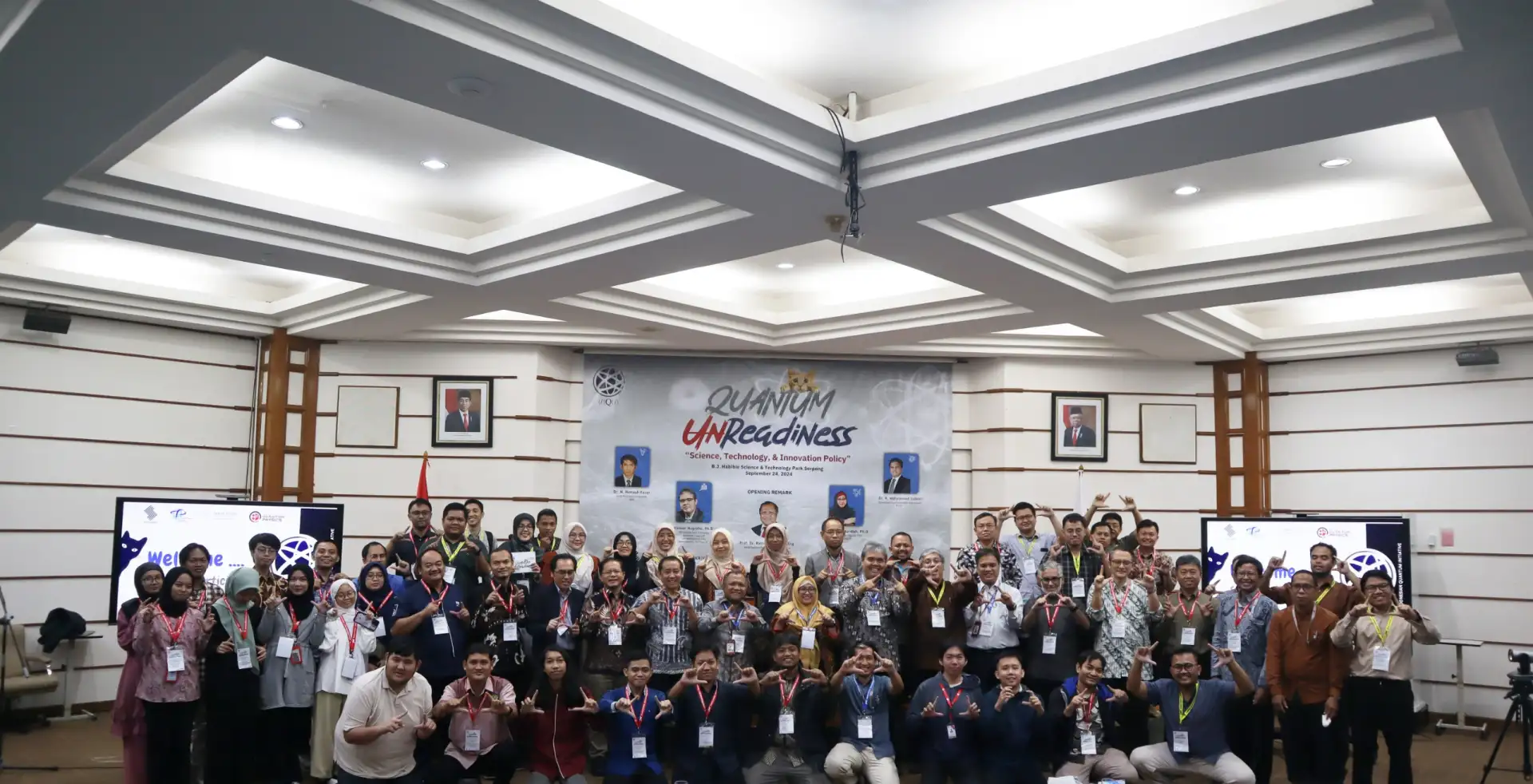
South Tangerang-BRIN Public Relations The year 2025 has been designated by UNESCO as the 'Quantum Year'. This marks the beginning of the development of global technology.
Indonesia, with its large human resources, has the potential to become a pioneer in the field of quantum technology.
The Chairman of the Research Organization for Nanotechnology and Materials of the National Research and Innovation Agency (BRIN), Ratno Nuryadi, emphasized the importance of Indonesia's readiness to face the era of quantum technology.
"Quantum technology is not something foreign; with government support, we can pursue the development of quantum technology and welcome the quantum 2.0 era," said Ratno at the Focus Group Discussion and Seminar titled Quantum Readiness, "Science, Technology, & Innovation Policy," at the Graha Widya Bhakti Building, B.J. Habibie Science and Technology Park, South Tangerang, on Tuesday (September 24).
This event aims to discuss Indonesia's readiness strategies in facing the rapidly advancing developments in quantum technology.
The Head of the Research Center for Quantum Physics at BRIN, M. Hamzah Fauzi, explained the development of quantum research in Indonesia and its potential benefits in various sectors, such as communication, health, and data security.
"BRIN has an ideal position to serve as a bridge for creating the development of quantum technology in the future, act now or never," as said by Hamzah.
In the meeting, the Director of Higher Education and Science and Technology of Bappenas RI, Andri N.R. Mardiah, emphasized the importance of the role of science, technology, and innovation in national development. According to Andri, science, technology, and innovation are the spearheads in facing global challenges towards a Golden Indonesia.
"There is a need for policies that support research and higher education to encourage innovation and prepare superior human resources. With the right approach, Indonesia can harness the potential of science and technology for sustainable development and the welfare of its people," she explained.
In line with this, Science and Technology Policy Expert from Bappenas RI, Yanuar Nugroho, outlined the importance of adaptive policies in supporting research and technology development, such as prioritizing technology transfer policies and industry collaboration.
He highlights the need for prioritizing quantum research and development with a special allocation of funds. Additionally, it emphasizes other policy priorities regarding human resource development, such as international scholarships and quantum curricula.
"Furthermore, the policy priorities concern research infrastructure, and of course technology transfer and industrial cooperation, so that innovation can be implemented in a tangible way," as explained by Yanuar.
Then, the Director of Nuclear Facility Management at BRIN, R. Mohammad Subekti, emphasized the role and functions of BRIN. In addition to being an institution that carries out research and innovation, it also provides research and innovation-based policy support to ministries/agencies and local governments, as well as strengthening the national research and innovation ecosystem. Of course, strengthening research and innovation infrastructure to support the development of quantum technology in Indonesia.
"BRIN is committed to providing adequate facilities with an online one-stop station featuring ELSA services," he said.
The Quantum Readiness event can trigger further collaboration between research institutions, the government, and industry in formulating policies that support the development of quantum technology. With this step, Indonesia is expected to compete on the international stage in mastering future technologies. (sm/ ed: adl, tnt/translator:akb)